Bank financing of agricultural business

Agricultural enterprises are on increase and in need of attracting long-term financial resources and bank financing of agricultural business alongside modernization of equipment, the construction of new facilities, and the introduction of innovative technologies.

The development and prosperity of agribusiness is impossible without attracting credit resources, since agriculture is a capital-intensive industry with a high level of risk.

Due to the uncertainty of external factors, low creditworthiness, low quality and liquidity of the collateral that enterprises can offer, the lack of mortgage lending mechanisms in the sector, as well as due to the imperfection of legislative mechanisms, obtaining these loans can be quite problematic. This is especially true of developing countries.

The current situation on the market of long-term bank financing of agricultural business, the key problems of bank lending to agricultural enterprises include the following:

• A significant increase in financial risks caused by obtaining a loan, which in the future may lead to a loss of financial stability and a decrease in solvency.

• Borrowers lack liquid collateral for loans, as the assets of most agricultural enterprises are limited to land and equipment.

• High loan interest rates and a long procedure for reviewing loan applications from agribusinesses that require state support.

• The strong impact of seasonality on agricultural production and dependence on climatic conditions, which are largely unpredictable and pose a certain risk.

• Unstable legislation and financial system, especially in developing countries.

To secure bank financing of agricultural business in a highly competitive environment, it is necessary to create an adequate financial infrastructure aimed at large-scale agricultural lending.

The financial infrastructure should include not only commercial banks, but also credit unions, credit cooperatives and other institutions operating with the financial support of the state and/or supranational bodies. In the countries of the European Union and beyond, there are many successful examples of building such a financing system that contributes to the stable development of agribusiness.

Agriculture of any country remains the basis of food security, which depends on large long-term investments and lending.

There is a seasonal gap between investment and cash flows from the sale of products.

A significant need for working capital turns bank loans into the main source of replenishment of financial resources for the medium and short term.

However, the study of the finances of agricultural enterprises shows that they mainly work at the expense of internal resources, which are often insufficient. Limited resources force agribusiness to seek support from banks through various forms of lending, hence the need for strong state regulation and support in this area.

The problem of insufficient access to bank financing is particularly characteristic of small and medium-sized businesses. According to international financial organizations, about 80-85% of the financial needs of farmers around the world are not met, including due to the lack of adequate conditions for debt financing. The needs of small farms now exceed $200 billion, while financial institutions invest a little more than $30 billion in their development.

Bank financing of agricultural business is much better, but this segment also faces many problems interacting with banking institutions.

Finding and attracting a bank loan for a large-scale agricultural project today is quite a difficult task that should be entrusted to a professional financial team.

Investments in agriculture and bank financing of agribusiness

In current realities, agriculture remains one of the most important sectors of the global economy.

The stable development of agricultural enterprises guarantees food security, creates a source of budget revenues and increases the potential for the development of rural areas and local communities.

Agricultural financing currently involves the use of a wide range of sources, mechanisms and tools for the formation of financial resources.

To ensure uninterrupted activity of agricultural business, it is necessary to provide several alternative sources of financing, which are not mutually exclusive and can be used simultaneously.

The structure of bank financing of agricultural business is a multifaceted process that depends on many factors, including the rhythm of inflows of funds in a certain period of time, directions of enterprise development, financial health, market structure, and investment prospects.

Internal sources of financing agricultural projects, which are formed using the company’s profit, play an important role in the investment activity of large agricultural companies, which ensures their independence and financial stability.

However, the practice of leading agricultural enterprises proves the need for bank lending, including long-term loans for financing large, expensive projects.

Nevertheless, a dynamic and highly competitive globalized economy requires rapid response of agribusiness to environmental changes, so internal financial sources are often insufficient to ensure effective current activities and investments. Due to its high sensitivity to the influence of various negative factors, agriculture also needs certain state support.

Thus, external debt financing (long-term investment loans, leasing instruments, project finance mechanisms), as well as government subsidies, are important factors in the successful development of agriculture.

Time of great investment opportunities in agriculture

Investments in agriculture today are considered extremely profitable and critically important for the world economy.

The conflict in Ukraine in 2022 has reminded us of the vital role of an uninterrupted supplies of agricultural products, the disruption of which can cause skyrocketing price increases and shutdown of entire industries.

Today, the global agricultural sector needs huge investments. These should be smart investments that will contribute to the fight against climate change, increase overall efficiency of agricultural production and promote new products. It is difficult to overstate the importance of financing innovation in agriculture, which remains extremely sensitive to adverse environmental factors such as drought.

For example, extreme climate conditions in North America in 2021 caused direct losses to US agriculture of approximately $150 billion.

These losses could be much smaller.

It is worth noting separately the growing financing of the so-called vertical agriculture, which, according to forecasts, will reach $32 billion in 2030. These innovative technologies are actively developing in the USA, Japan, China and a number of other developed countries, where companies are actively attracting venture capital for the commercialization of innovative technologies.

Experts emphasize the importance of financing projects, which are based on the latest technologies and principles of climate neutrality. Agriculture on the current scale is a huge contributor to global warming, and negative climate change is beginning to affect the efficiency of agriculture.

These changes expose the economy to new risks, and smart investments must break this vicious cycle.

The financing of the production of agricultural raw materials (rice, wheat, palm oil, coffee, fruits, vegetables, cocoa) provides work for a number of processing industries. But innovative projects in this area are very expensive and require long-term flexible financing.

The coming years will be an extremely favorable period for the financing and development of new investment projects in agriculture, as tectonic geopolitical changes will require new solutions, including in the field of food security.

CP Finance UK is ready to help agribusiness in long-term financing of agricultural projects across the world.

We provide the following services for large businesses:

• Investment crediting of agricultural projects.
•Commercial and industrial loans.
• Project finance for capital-intensive initiatives.
• Refinancing for agribusiness.
• Financial engineering and modeling services.
• Letters of credit and bank guarantees.
• Investment consulting and much more.

Our company has united leading investment and financial experts who work side by side with the customer at all stages of the investment project in order to achieve the optimal result.

At CP Finance UK, we enjoys the support of well-known commercial banks, cooperating with international investment funds and major financial institutions in Europe and beyond.

Advanced financial technologies, reliable financial support and rich experience in the agricultural market allow us to offer flexible customized solutions for each project.

CP Finance UK FINANCE LIMITED
Website:https://c-pfinanceuk.com/
E-mail:finance@cpuk-financeltd.com
Alt-Email:admin@cpukfinanceltd.com

Read More

Financing large energy projects

Combined project finance, investment loans,  (PF) schemes, bond issues – financing  for large-scale energy projects are extremely diverse.

Most energy companies require some form of financial support, especially renewable energy projects.

Banks are showing strong interest in investing in the renewable energy sector amid a clear decline in interest in coal projects around the world.

However, each business has unique requirements, which is why our team is open to any project.

CP Finance UK offers a full range of financial and engineering services for energy companies, including financing of energy projects, construction of power plants, substations and power lines under an EPC contract.

At CP Finance UK, we provide funding for the following projects:

• Construction and modernization of thermal power plants.
Construction of solar power plants of all types (PV and CSP).
• Construction and modernization of hydroelectric power plants.
• Construction of geothermal power plants.
• Construction of electrical substations.
• Laying of transmission lines, etc.

Contact our consultants at any time for details. 

Traditional sources of financing for large-scale energy projects

Over the past decades, the energy sector, due to its strategic nature, has attracted significant private investment and bank loans. Most large companies in the sector raise funds primarily through project finance instruments or investment loans.

Traditional corporate financing is used when the amount of investment is adequate to the current scale and activities of the company.

In this case, the net debt / EBITDA ratio usually does not exceed 3 throughout the entire financing period.

Corporate finance is considered the most cost effective financing option. It also gives more flexibility and reliable access to funds, since the bank guarantees the repayment of the debt based on the results of the analysis of the financial performance of the borrower.

The 2008 crisis has increased the caution of commercial banks in providing loans, including investment loans to finance large energy projects. Caution is still expressed in increased requirements for borrowers, higher interest rates and shorter loan terms.

Currently, due to a slowdown in the economy and uncertainty due to the pandemic, financial institutions are still wary of large-scale projects with a long funding period.

However, in cases where the financing period exceeds 7-8 years, certain elements of project finance are usually integrated into the corporate finance structure, and in some cases, financing is carried out according to the PF formula.

The high risk of investors associated with the preparation of project finance models contributes to the attractiveness of traditional methods of business financing.

There are currently few energy projects in the world that exceed the recommended net debt / EBITDA ratio.

Therefore, both energy companies and banks prefer a corporate finance model that avoids complex PF procedures and reduces costs.

To a large extent, the choice depends on the specific company. For example, young companies with large ambitious projects cannot obtain sufficient loans under the traditional scheme, therefore they are forced to use PF.

The possibility of traditional financing largely depends on the borrowing company.

The more assets a company has, the higher its ability to generate EBITDA.

Thus, large energy groups have much more opportunities to obtain loans. European experience shows that very large funds can be obtained in this way. Large companies in Poland, Spain, Germany and other countries are announcing multi-million dollar bond programs.

Corporate finance instruments are now relatively cheap and simple whiles financing a large-scale energy projects

This is evidenced by the fact that the current supply of banks in financing the energy sector based on the borrower’s balance sheet exceeds the needs.

However, banks to protect their interests use separate contractual provisions, to some extent limiting the activities of the borrower. Restrictions usually apply to lending, guarantees, collateral, ownership structure, etc. These restrictions usually apply to the entire energy group.

The situation is completely different with project finance. Although the structure of the PF contractual relationship is much more complex, the restrictions mainly apply to special purpose vehicles (SPVs) and to a lesser extent affect the activities of the initiating company.

Sometimes a loan is considered as bridge financing for a specific investment period.

Ultimately, the part of the enterprise that has already been put into operation can be classified as an SPV and refinanced with a long-term loan provided by the bank directly for the SPV.

From the point of view of financial institutions, this practice minimizes the risks associated with the investment process. This ensures the safety of lenders and allows investors to save time and costs associated with bank supervision of the investment process and risk assessment of contractors. In addition, since the loan refinances a finished project, which does not entail additional risks associated with the investment process, it can be provided on much more favorable terms compared to standard contracts.

As mentioned earlier, the ability to obtain financing based on traditional models is limited by the ratio of net debt to EBITDA.

In the short to medium term, energy companies should have no problem with such financing.

However, as the need for financing large-scale energy projects is increasing, this model will soon fail to provide the required investments in the energy sector to maintain sustainable power generation and modernize distribution networks.

As a result, even the most powerful companies have to look for alternative long-term financing instruments.

Energy project finance

Projects that are more costly than the company’s current assets require project finance.

This financing formula is also chosen to limit the risk borne by the project sponsor and in case of attracting a large number of investors.

The PF is based on the assumption that the debts will be fully repaid from the funds received from the project. In the European energy market, this approach has been widely used to finance wind farms.

Preparations for financing large-scale energy projects can take up to several years, especially if the initiator invites a wide range of participants.

Financing energy projects includes the following stages:

• Development of a project concept and, in the case of attracting a large number of investors, establishing clear rules for their future cooperation.

• Carrying out a feasibility study taking into account all aspects of the project.

• Obtaining appropriate licenses and permits, negotiating concessions, etc.

• Analysis of the environmental impact of the future facility and obtaining environmental permits, as well as negotiations with the local community.

• Development and approval of technical and commercial documentation, preparation of a tender and signing an agreement with the general contractor (EPC contract).

• Obtaining funding for the project.

In the case of large projects requiring funding from several or even a dozen financial institutions, the initiator usually hires a financial consulting team to make decisions.

Such projects require a lot of research and negotiations with the participants.

CP Finance UK is ready to provide clients with various financing options for an energy project, helping to organize and coordinate financing. Both the initiator of the project and banks and investors cooperate with specialized companies responsible for due diligence.

When it comes to the energy sector, potential investors should additionally conduct technical analysis in accordance with accepted standards.

Investment loans for energy projects

The needs for long-term investment in the energy sector in Europe, East Asia and Latin America are enormous.

The question is how to find the most convenient funding sources for numerous projects.

Technological and regulatory uncertainty, which determines the hardly predictable efficiency of investment projects in the energy sector, remains a very serious problem for the market. The tightening of restrictions in the banking system is also becoming an important obstacle.

Although the best projects will find their place even in adverse conditions, the success of the vast majority of investments will depend on the stability of the regulatory framework and the right choice of financial solutions.

Sources of long-term financing of energy projects, in addition to the issue of securities (shares, corporate bonds) and leasing, is an investment loan. Companies use it as their primary source of funds for capital intensive projects.

An investment loan is a type of bank loan provided to finance investments aimed at increasing the value of a company’s fixed assets.

Typically, this loan is issued for a period of several years to two decades or more.

Funds received under an investment loan can be used in different ways. They are most often used to buy new fixed assets such as cars, machinery, devices or equipment. They can also be used to buy, build, expand, add or upgrade commercial properties, or lease equipment.

Loan funds do not have to be used only for investments in tangible assets.

Banks are willing to finance promising projects initiated by well-known energy companies with good financial reporting.

Syndicated investment loans are also in high demand for financing for large-scale energy projects.

Consortia are usually formed by banks that have previously collaborated on various investment projects. Sometimes they include small financial institutions or banks that do not work in the energy sector on a permanent basis.

Project initiators should carefully consider what kind of financial partners they want to see in their project.

Situations vary, and it is very important for energy companies to provide a strategy at all stages of the investment process, including the operation and maintenance of a new facility.

The energy sector needs long-term thinking and strong partnerships.

CP Finance UK is ready to become your reliable partner in Europe and beyond.

Are you looking for financing for energy projects?

Contact us at any time.

CP Finance UK FINANCE LIMITED
Website:https://c-pfinanceuk.com/
E-mail:finance@cpuk-financeltd.com
Alt-Email:admin@cpukfinanceltd.com
Read More

Large construction project financing: a selection of sources

Undoubtedly, investing in large construction project financing requires large financial costs.

It may seem that experienced developers should have no problem with this.

However, in the face of a lack of funds, many companies are abandoning promising projects. To maintain financial liquidity and business activity, developers should consider applying for an investment loan.

In general, there are many options for financing construction projects. Most often, self-financing, attraction of external funds, or various combinations of external and internal sources are used.

• Self-financing of construction: net income, depreciation, sale of assets, tax savings as a result of investment incentives.

• Debt financing (for example, construction loans, non-bank loans, leasing, bonds), as well as issuing securities (issuing shares and raising venture capital).

When a unique investment opportunity appears on the market, and the company’s budget does not have sufficient financial resources to prepare an attractive proposal, it is worth turning to solutions such as investment loans and project finance.

More and more large companies in the construction industry decide to use investment loans for their projects. Today, developers are attracted primarily by speed, flexibility and a minimum of formalities. These advantages, combined with customized financing schemes, guarantee the success of the project. There are about 60 different financing methods described in the literature, which differ in many criteria and can be used for different projects.

The main dilemma for each developer at the stage of preparing an investment project is the choice of the most suitable organizational structure, which, in turn, determines the choice of the source of financing.

Large construction project financing: investment loan for construction

Bank loans, project finance (PF) and private investment are well-known methods of  large construction projects.

During the period of quarantine and economic downturn, many developers have experienced difficulties in completing planned projects and starting new construction.

This situation forces businesses to look for alternative sources of funding.

The most popular source of funds for developers is investment lending.

Almost all well-known European banks include this financial product in their offer. Until recently, banks competed in lowering margins because the credit risk was lower.

Recently, however, banks have become more cautious, and many developers find it difficult to obtain large loans.

The most important thing in investment lending is flexible adaptation of the financing structure to the requirements of the project.

Banks seek to finance low-risk projects.

Obviously, financial institutions are more likely to lend for construction projects to large and experienced developers.

For large construction project financing, the so-called project finance is used, which involves attracting investments through independent companies (SPVs) based on the future cash flows of the project.

Controlling risks, not only financial, but also related to other aspects, such as the influence of external factors (natural disasters), supplier risk, contractor risk, political risk, plays a key role in project finance schemes.

Choosing reliable partners for an investment project is a priority.

CP Finance UK offers financing for construction projects, including the construction of factories, power plants, ports, roads, water treatment plants, hotels, etc.

The role of project finance in the construction industry

To take full advantage of modern tools for financing construction projects, it is often necessary to create an independent business entity.

Its task will be to implement a specific investment project.

In addition to traditional and well-known forms of construction finance (loans, bonds, leasing), other less popular instruments such as project finance can also be used. They represent the financing of capital intensive projects through an independent entity.

A construction project can be carried out within an existing company that has worked with other construction projects, or it can be carried out by a so-called special purpose vehicle (SPV).

In the case of implementation of development projects, SPV shareholders usually act as sponsors. A sponsor is defined as an entity that provides an incentive to start implementing an investment project. Typically, a development company creates a special purpose vehicle, bringing in its technology, industry experience and other resources (for example, a land plot).

The long list of potential providers of capital for SPVs includes state and commercial banks, private lenders and other investors buying bonds issued by the project company.

Project finance is based on the assumption that the project itself and the assets obtained as a result of its implementation will be the main, and often the only, source of debt repayment and collateral.

The traditional method of analyzing the operating history and assessing the creditworthiness of the borrowing company is not used, since the SPV is a new legal entity that is created to implement a development project. In this case, the credit risk analysis relates to the investment project and not to the borrower.

There are two main approaches to financing construction projects, the non-recourse method and the limited recourse method.

A typical situation for a PF assumes the absence of any form of recourse to the borrower.

Due to the limited capacity of provision, capital providers are usually interested in joint project management, which allows them to monitor the work on an ongoing basis and minimize the risk of events that could negatively affect the project.

Large construction project financing using a non-recourse financing is a scheme whereby borrowers do not provide collateral.

The debt is fully repaid from the future cash flows of the project, and possible claims of creditors cannot be transferred to other activities of the initiator.

Most often this refers to investments in strategic infrastructure implemented on the basis of multilateral agreements on public-private partnerships (PPP).

Regardless of the field of activity, project finance today plays an important role in the implementation of large construction projects around the world.

At CP Finance UK, we are ready to provide clients with a full range of services, including financial modeling, legal advice, assistance in registering an SPV, raising funds on the most favorable terms, tax optimization, etc.

Alternative sources of funding large construction projects

Another way to raise funds for the implementation of construction projects is to issue corporate bonds of development companies.

Interest in this tool is growing every year, especially after the financial crisis. The attractiveness of bonds is due to their flexibility and efficiency in the use of funds. The developer’s collateral capital can be freely used for several years and even transferred between several projects, which is impossible in the case of a bank investment loan.

The funds received from the sale of bonds are used only to finance a specific project, be it a new project or refinancing of already started projects.

The funds raised from a developer’s bonds are an ideal example of bridge financing. They can be a valuable addition to loans. It should be noted that the success of bond financing directly depends on the credibility of the developer. Therefore, this method of financing is chosen by well-known companies that have achieved numerous successes and collaborate with recognizable brands.

Developers facing difficulties in obtaining an investment loan or unwilling to use traditional forms of project finance are increasingly choosing to finance new projects through alternative sources.

Growing requirements of banks and unfavorable conditions for granting loans are pushing entrepreneurs to search for them. In particular, many European firms are discouraged by the current parameters for LTV (loan amount versus collateral value) and LTC (loan amount versus total investment cost).

Supporting developers with non-bank private investments is becoming increasingly important.

Attracting private capital to large construction projects is a modern investment strategy that, although more expensive than a bank loan, allows you to finance complex and risky projects faster.

All negotiations take place directly with the investor, which contributes to the flexibility of the contractual relationship and reduces the time for making a decision.

Public financing of construction projects has great investment potential.

The so-called crowdfunding as a social investment tool is gaining supporters both among developers looking for an alternative source of funding and among investors.

Both sides of the project find each other through dedicated online real estate crowdfunding platforms. Each investor receives a share of the rental income of the property built, proportional to his invested capital, or the developer undertakes to repurchase the shares within a specified period.

Bank lending continues to be the most popular form of funding a large for construction project financing around the world.

But the economic downturn caused by the COVID-19 pandemic shows how problematic and risky it is for developers to rely on one tool to finance their operations.

The current difficulties in obtaining an investment loan have long prompted many investors to look for alternative sources of financing and their diversification.

The basis for the success of a construction project

When implementing a construction project, banks pay special attention to several conditions that the borrowing company must fulfill.

As a result, the risk of financing the entire project is significantly reduced. The fulfillment of these conditions is important from the point of view of other partners funding the project. This allows the parties to more effectively control and protect their investment.

Some developers are still trying to implement the initial stages of the project, while simultaneously applying for official permits.

However, a loan can be issued only after receiving all permits (including those related to environmental protection and the interests of the local community).

Banks may also require an experienced general contractor to carry out construction and installation work, which increases the chances of project success. It is extremely important to cooperate with a well-known and proven contractor who has already performed this type of work. Working with such a partner reduces the risk of various delays.

Finally, in order to obtain a construction investment loan, it is important to attract a reputable expert in technical and construction issues.

The task of an independent expert is to control the quality of all investment and related documentation.

CP Finance UK provides a full range of services in the field of construction.

We are always ready to offer a reliable general contractor for the construction of large facilities under the EPC contract.

CP Finance UK FINANCE LIMITED
Website:https://c-pfinanceuk.com/
E-mail:finance@cpuk-financeltd.com
Alt-Email:admin@cpukfinanceltd.com
Read More

Commercial construction lending: cost and conditions

The cost, interest and conditions for issuing a commercial construction loans differ from bank to bank only in details, because its general parameters are quite typical in all institutions.

Such a loan is provided for a specific purpose, such as the construction and expansion of a commercial property for sale or rent.

Repayment of the loan begins from the moment the facility is put into operation or the property is sold.

When discussing the terms of a particular financial product, it is important to take into account factors such as the bank’s margin, the applicable interest rate (for example, LIBOR), project timeframe, construction cost, assessment of the project’s profitability and creditworthiness of the client.

Typically, funds are offered for commercial construction loans for a period of 3-5 years or more, amounting to no more than 80% of the investment value.

To apply for a loan, a company must submit an application to the bank along with the documents listed above. Financing commercial construction involves large amounts of money over a short period, which also means high risk. It should be borne in mind that it can take up to several months for bankers to review the application and evaluate the project.

Obtaining a development loan for a new company that cannot yet demonstrate any construction experience can be difficult.

Banks offer loans only to companies that meet certain requirements, including financial stability, long experience in construction investments (usually at least 2-3 years), as well as collateral (for example, land plot) and initial contribution of at least 20% of the cost of construction. A commercial construction loan can also be provided to developers who will create a special legal instrument (separate legal entity) for the implementation of specific investments based on project finance.

It is generally easier to get a commercial construction loan for new companies that decide to set up a special purpose vehicle (SPV).

Banks are more favorable to such applicants, since it is easier for them to control the implementation of investments. In this case, however, the project documentation and partners’ credit history will have a big impact on the final decision.

Commercial construction loans

Increasing long-term investment in commercial construction loans and the consequent need for large sums make lending instruments very attractive for investors and financial institutions.

Loans to developers have provided strong support to major real estate sectors, including the construction of office space, industrial facilities, warehouses, shopping centers and other retail spaces.

Banks, credit unions, and investment firms often set up mortgage lending units locally, offering corporate clients a wider range of financial products on different terms.

Global commercial construction loans market exceeds 12 trillion euros and continues to show growth despite temporary difficulties.

Major players such as Goldman Sachs and Wells Fargo continue to finance capital-intensive projects by providing commercial construction loans and other financial instruments to their clients around the world.

The US, UK, EU countries, UAE, China and other giants of the global economy are showing impressive gains in commercial construction amid increased competition for capital, requiring new, more flexible models for long-term financing of construction projects.

A development loan is a special type of loan issued by banks to developers who are engaged in the implementation of various capital-intensive projects, including commercial real estate. A loan agreement is usually signed for a specific purpose, such as financing the cost of building or expanding a commercial property held for sale.

A typical development loan is intended to cover at least part of the cost of a construction investment, which is usually very high.

Most often, developers need borrowed funds for construction:

• Office buildings.
• Industrial facilities.
• Warehouse areas.
• Multi-family rentals.
• Shopping centers.
• Other commercial properties.

The implementation of such projects is often estimated at tens and even hundreds of millions of euros.

Consequently, only a few developers can cover such large investment costs with internal resources. That is why in European countries and other Western countries, financing of commercial construction projects in most cases is carried out with the help of banks.

Developers can apply for large loans for a specific investment project by providing the bank with strong guarantees (collateral) and detailed project documentation confirming the feasibility of a particular idea. Obviously, banks must first evaluate each project in terms of risk and profitability. It is important to note that most institutions provide funding only to cover part of the costs of implementing investments, usually no more than 50-70%.

Moreover, funds are rarely provided to the borrower in full, but banks prefer to issue construction loans in tranches after the completion of subsequent stages of construction work.

Commercial construction loans are now available at many institutions because banks are willing to finance construction projects in many cases.

This is facilitated, for example, by a favorable situation in a particular segment of the real estate market, which minimizes the risk of investment failure.

In terms of how it works, a property development loan is in many ways similar to an investment loan for the construction of a house, which individuals take out against a mortgage. In both cases, funds are allocated in tranches as construction progresses, which are under the control of the bank.

Similar to individuals taking out mortgages, developers must also provide adequate collateral to guarantee repayment of the debt.

CP Finance UK brings cutting-edge financial modeling expertise and years of international funding experience to your most ambitious projects.

If you are interested in a long-term commercial construction loan, project finance or consulting services for large businesses, please contact us.

CP Finance UK FINANCE LIMITED
Website:https://c-pfinanceuk.com/
E-mail:finance@cpuk-financeltd.com
Alt-Email:admin@cpukfinanceltd.com
Read More

Loans instruments to finance a current business activities

Along with investment loans, various loan instruments to finance a project and other business activities play an important role in the development of the global economy and business.

The choice of a particular method largely depends on the financial health of the borrower, goals and scale of lending.

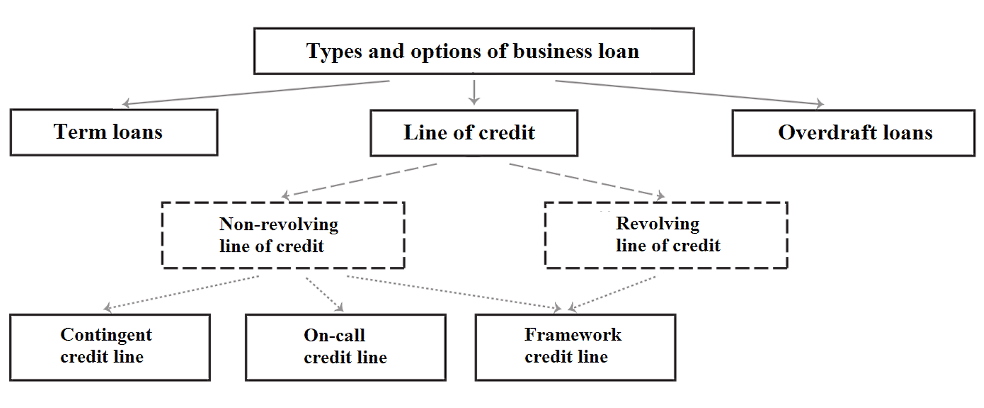
In banking practice, the most common methods of lending to business are the line of credit (LOC), overdraft and term loan (for example, investment loan), as shown below.

Each of these approaches differs in its specific features that are suitable for a particular area of the company.

Also, the choice of lending options depends on the nature of the financed project.

Lending instruments and options depend on the nature of the project or business being funded

One-time term loan is a traditional way of business lending and certified loan instruments to finance a project which is characterized by a simple procedure for providing funds, clarity and consistency in the organization of the lending process.

This type of loan is used in cases where the company needs additional resources at once, ie the client receives the full amount at once as specified in the loan agreement.

The line of credit differs from the classic loan in that the disbursement of credit funds is in certain parts (tranches) within the established limit, as the borrower needs financial resources. This implies a longer and closer cooperation between the borrower and the bank, constant monitoring and analysis of financial needs.

An overdraft loan is used to eliminate payment gaps that arise in economic activity, ie it can be used only for a short period of time.

Line of credit (LOC) as Loan instruments to finance a project

A line of credit is a financial resource provided by a bank in tranches, usually on a targeted basis to meet current needs within a set limit over a period of time specified in the loan agreement.

The term of the credit line agreement is determined based on the specific objectives, but, as a rule, this period usually varies from 1 to 3 years.

The interest rate for the use of a credit line is set by agreement of the parties, but may not be lower than the base rate. The cost of using credit resources, in addition to interest on the loan, may include a bank fee. Processing of documents is carried out once when concluding an agreement on opening a loan account. In the future, the borrower only uses the loan within the credit limit for the purposes specified in the agreement, without additional processing of documents for the loan.

The credit limit may be revised by agreement of the parties both at the request of the bank (for example, in case of deterioration of the borrower’s financial health, reduction in the cost of collateral) and at the request of the borrower (for example, in increasing production and turnover).

In case of deterioration of the financial balance of the borrower, the bank has the right to stop the next tranche for a certain period, or stop cooperation altogether and demand early repayment of previously obtained funds, which must be stipulated in the loan agreement.

The credit line as a loan instruments to finance a project can be issued in the following cases:

• Permanent and predictable nature of business activities.
• Convenient opportunity for quick receipt of small tranches for long periods of time.
• Saving time by drawing up one agreement instead of drawing up several documents.

The method of calculating the credit limit is determined by banks, but the main criteria include the parameters of the turnover of the borrower’s assets, the presence of seasonal factors of production, the level of working capital and more.

LOC as a loan instruments to finance a project allows the client to use more funds than available on the current account.

Repayment of loans under this program occurs automatically with any receipt of funds on the current account. First of all, interest is repaid, and the remaining amount is used to repay the principal debt. This makes the credit line a very convenient financial mechanism for numerous companies engaged in active production and investment activities.

The advantages of the loan under the concept of the credit line is that the borrower is given the opportunity within the established limit to use borrowed funds at the time of need.

This, in turn, significantly reduces the cost of servicing the loan.

Revolving and non-revolving credit line

A credit line for a business can be revolving or non-revolving.

Non-revolving credit line means that the loan amount is transferred to the company’s current account in certain tranches.

The amounts and dates of specific tranches are specified in the loan agreement or determined in real time on the basis of the borrower’s applications. After the transfer of the entire amount, the limit is closed and the borrower can not use it a second time.

Revolving credit line is a lending scheme that allows the borrower to receive funds periodically within a pre-set limit as needed during the term of the credit line, repaying all or part of the amount.

As the credit line is used, the borrower’s debt decreases, and the credit limit is restored. In this case, the borrower has the opportunity to obtain the next part of the loan.

A credit line with an issuance limit assumes that the borrower can receive credit only a certain number of times. The total amount of all tranches may not exceed the established credit limit.

A credit line with an issuance limit is used for the following purposes:

• Purchase of assets to expand production (including equipment, transport, buildings).
• Purchase of materials, goods and services, wages, replenishment of working capital.

A credit line with a debt limit means that the borrower can re-use the loan after the debt is repaid, with only the amount of the debt being limited and no limit on the issuance of funds.

The sooner the borrower repays the money, the sooner he will get a new loan. A credit line with a debt limit is appropriate if the company periodically needs short-term borrowing.

Framework (target) credit line means that the bank is ready to quickly enter into credit agreements or open credit lines in a predetermined amount and on previously established terms. Such a credit line is typically used by businesses to pay for deliveries under contracts that run over a period of time, as well as to finance the costs associated with implementing targeted commercial programs.

Overdraft financing instruments for business activities

Another interesting loan instruments to finance a project and any current business activities is overdraft lending.

Overdraft means a short-term loan within the limit set by the bank, which allows the company to cover transactions in amounts exceeding the current account balance.

An overdraft loan can be issued for a decade, a month or a year, depending on the needs of the borrower and the type of overdraft. Movable and immovable property of the borrower, bank guarantees, financial guarantee of third parties may act as collateral for the overdraft. An overdraft can also be provided without any collateral (so-called blank overdraft).

Overdraft is not targeted financing, ie the borrower determines the distribution and purpose of the use of borrowed funds.

The advantage of overdraft for banks is the ability to demand repayment of the loan at any time. On the other hand, the client receives low interest rates, the ability to freely use borrowed funds, as well as preferences for regular customers in the form of lower interest rates or higher credit limits.

The overdraft limit is the maximum allowable amount of actual debt at any given time. Each bank can use its own method of calculation, and the limit set by the bank depends more on the financial health of the borrower and his credit rating.

The terms of using the overdraft depend on the bank’s credit policy.

One of the options is that interest for using the overdraft is accrued once a month on the actual debt and for the actual term of the loan (fact / 365 days) and must be paid in the month in which they are accrued. Interest is repaid daily automatically from the current account, which operates in overdraft mode.

The bank charges a penalty and increased interest for late repayment of the loan on the overdraft.

An overdraft is essentially similar to a standard loan, but it has a number of advantages.

Project finance and investment consulting from CP Finance UK FINANCE LIMITED:

• From €50 million and more.
• Investments up to 100% of the project cost.
• Loan term from 10 to 20 years.

To consider the issue of financing your project, send us the completed application form and project presentation by e-mail.

CP Finance UK FINANCE LIMITED
Website:https://c-pfinanceuk.com/
E-mail:finance@cpuk-financeltd.com
Alt-Email:admin@cpukfinanceltd.com

Read More

Industrial loans and large business lending in Singapore

In the 21st century, industrial and business loans in Singapore has evolved into an advanced economy that favors foreign business and investment.

This country attracts numerous businesses in the field of energy, electronics, mechanical engineering, shipbuilding, oil refining, chemical industry, biotechnology and other areas.

The development of large business projects requires new sources of debt capital, including long-term investment loans, land loans and industrial loans in Singapore.

CP Finance UK FINANCE LIMITED with a wide international presence, can meet your financial needs. Our company offers long-term business loans in Singapore, other countries in Southeast Asia and around the world.

We also provide project finance services, financial engineering, financial modeling and consulting.

Contact us for details.

Loans, economy and business in Singapore

The rise of industrial and business loans in Singapore have paved way for market economy and has been described as one of the most open and business-friendly.

An important factor in the business attractiveness of Singapore are moderate taxes, including corporate taxes. Thanks to clear legislation and a developed financial system, this country favors large business, including the financing of large investment projects in various fields, from electronics to transport.

Singapore is home to some of the world’s largest banks and financial institutions such as Oversea-Chinese Banking, DBS Bank and United Overseas Bank.

Thanks to successful economic policies, Singapore has a high GDP per capita (over $130,000 in purchasing power parity). With a total population of less than 6 million people, Singapore has achieved a GDP of over $600 billion at purchasing power parity (2022).

Strong economic ties through maritime trade routes, low inflation, easy access to debt capital and a growing pool of skilled labor also have a positive impact on large investment projects in Singapore.

Small and medium-sized businesses form the basis of the economy, providing up to half of the country’s total GDP. Singapore treats this sector with care, creating a favorable environment and the necessary incentives for the development of entrepreneurship at all levels. As for the financing of large businesses, Singapore has all the conditions for the development of investments.

This is a huge capital market and one of the largest financial and banking centers in Southeast Asia, which is very attractive for foreign financial institutions. Getting a large industrial loan for a business in Singapore is quite simple, given the huge number of foreign banks and loan offers for every taste.

Benefits of doing business in Singapore include the following:

• Favorable tax legislation: rational approach to corporate taxes, absence of tax on capital gains and dividends, preferential taxation for new companies, agreements on avoidance of double taxation with dozens of leading countries of the world.

• Free market economy: minimum bureaucratic barriers, highly developed financial markets, permission to acquire 100% of the shares of Singaporean enterprises by foreigners, no restrictions on the repatriation of capital and much more.

• Low Corruption: Singapore is famous for its highly-effective anti-corruption legislation, which guarantees a level playing field for local companies and foreign investors; business may not be afraid of pressure from officials.

Over the past decades, Singapore has enjoyed a huge influx of foreign direct investment, benefiting from close cooperation with the largest multinational corporations.

Despite the freedom of market relations and a favorable business climate, the public sector plays a very important role in the economic and social development of Singapore. In particular, the state-owned investment fund controls a number of the largest and most profitable companies in Singapore, which helps the state fill the budget and maintain a high standard of social standards.

On the other hand, social and political stability help to attract investment and further growth of the local economy.

Companies in Singapore are largely export-oriented. A wide variety of industrial enterprises thrive here, buying cheap raw materials and processing them into high value-added products, taking advantage of cheap energy and a skilled workforce.

Local factories produce a wide range of products in demand around the world, including the following:

• Electronics.
• Fuel and lubricants.
• Chemical products.
• Modern drilling equipment.
• Telecommunication equipment.
• Biotechnology products.
• Engineering products.
• Shipbuilding products.
• Food products, etc.

Industrial and business loans in Singapore accelerated excellent infrastructure, creates optimal conditions for the development of trades.

Singapore is a critically important trading port in Southeast Asia, which accounts for the high share of maritime trade in the country’s GDP. It is also an important element in the competitiveness of the Singaporean economy, which is why investments in the construction of maritime infrastructure and terminals are flourishing here.

As for the weaknesses of the economy of Singapore, among them the first place is occupied by the lack of fresh water and insufficient free space. A significant part of the water is imported from neighboring Malaysia, and the country solves the lack of land for agriculture with the use of innovative technologies.

Despite the active financing of vertical farms, Singapore is able to produce only about 10% of the necessary food, being heavily dependent on agricultural imports.

Industrial and business loans: the largest banks of Singapore

Singapore’s banking sector provides easy access for local businesses and foreign companies to borrowed capital, contributing to the development of large investment projects in various industries.

For the most part, this system is built on the capital of international banks, which are actively developing the local market due to the favorable climate and legislative regulation.

Among over 150 banks operating in Singapore, only half a dozen are headquartered in the country. The rest is made up of foreign financial institutions, including large European banks. Below we have listed the largest banks in Singapore that are worth considering for large business financing.

DBS Bank: DBS Bank Ltd is a major financial institution registered in Singapore.

It was previously known as The Development Bank of Singapore Limited until the current name was adopted in July 2003 to reflect the change in role to become a regional bank. The bank was established in 1968 as a public financial institution in Singapore. It currently has over 100 branches scattered throughout the country.

DBS Bank is the largest bank in Southeast Asia by assets and is among the largest banks in Asia. It dominates the consumer banking, business lending, asset management, brokerage and debt collection sectors. In 1998, DBS Bank merged with POSBank, which significantly strengthened its competitive position.

The bank’s assets in 2019 exceeded $500 billion.

Oversea-Chinese Banking Corporation: Oversea-Chinese Banking Corporation Limited is a public financial institution headquartered in Singapore.

The Oversea-Chinese Banking Corporation was formed in 1932 from the merger of the Chinese diaspora banks in Singapore, Chinese Commercial Bank Limited, Ho Hong Bank Limited, and Oversea-Chinese Bank Limited.

OCBC Bank is one of the leading banks in the domestic market with assets of over $386 billion in 2020. It has one of the largest bank loan portfolios in the region.

The bank’s global network includes hundreds of branches with offices in countries such as Malaysia, Indonesia, China, Japan, Australia, Great Britain and the USA. OCBC is engaged in consumer and private banking, corporate and investment banking, insurance, global treasury services, and more. Owner of the Bank of Singapore since 2009.

United Overseas Bank (UOB): United Overseas Bank Limited is an international bank headquartered in Singapore with a large number of branches in Southeast Asia.

Founded in 1935 by Sarawakian businessman Wee Kheng Chang as the United Chinese Bank, the bank was created together with a group of businessmen of Chinese origin.

Today, the bank is the third largest in Southeast Asia in terms of assets ($320 billion in 2020). UOB offers commercial and corporate banking, personal financial services, private banking and wealth management services, as well as corporate finance, venture capital, industrial loans, investments and insurance services.

It has a network of more than 500 offices in two dozen countries and territories in the Asia-Pacific region, Europe and North America.

Bank of Singapore: Bank of Singapore is a large Singaporean bank, formerly known as ING Asia Private Bank, which was acquired by OCBC in 2009 from ING Group.

The bank offers customized asset management, investment, project finance and business lending services in addition to the general banking services provided by its parent bank, OCBC. It also offers financial modeling and financial analysis in areas such as international assets and real estate investments.

As of the 3rd quarter of 2022, the bank’s assets were estimated at about $109 billion.

Citibank Singapore: Citibank Singapore was founded in 1902 under the IBC brand and became the first American bank in this country.

Starting out financing rubber deals, the bank has quickly grown into one of the largest financial institutions in Singapore, providing consumer loans, industrial loans for large businesses, deposits, investments, insurance services and more.

Citibank plays an important role in lending to small and medium-sized businesses, including Industrial and business loans in Singapore and alongside, helping to develop the most important sectors of the local economy.

If you are looking for a land loan, industrial loan in Singapore or other type of business financing in Southeast Asia, you can also contact an CP Finance UK for more details

Our international team will develop a customized financial solution for your business needs.

CP Finance UK FINANCE LIMITED
Website:https://c-pfinanceuk.com/
E-mail:finance@cpuk-financeltd.com


Read More

Large business loans in Germany: history, current situation and prospects

Business loans in Germany has a long and strong tradition of business lending to driver her economy befitting to her citizens. 

The spread of the credit system began in the late Middle Ages. Large German lenders influenced politics by providing loans.

When the church ban on interest was abolished in the 16th century, the lending in Germany has truly blossomed. All citizens could take loans, since the debtor’s real estate was usually used as collateral.

To make it easier to issue mortgage loans, debts and ownership of property began to be registered in land registers from the 18th century. Since the entry into force of the German Civil Code in 1900, a single credit law has been in effect throughout Germany.

Since that time, the German banking system has gone through a long path of evolution, assimilating the best global models of business financing and strengthening them with its own principles and traditions. Nowadays, business loans play an important role in financing large projects, in particular projects based on project finance schemes.

This category includes land loans for developers, industrial loans and other forms of business financing that are widely used in Germany and other European countries to ensure sustainable economic development.

Large business loans, land and industrial loans in Germany

The German economy generates 5.26 trillion euros of GDP (PPP), of which 30% is provided by industry and 68% by the service sector.

The total volume of largebusiness loan in Germanyis estimated at hundreds of billions of euros every year, a large part of which goes to banks such as Deutsche Bank, DZ Bank, and others.

Long-term funding for early-stage projects is vital to put a new business idea on a solid foundation.

CP Finance UK FINANCE LIMITED offers project finance, large business loans, land loans and industrial loans in Germany, as well as provides loan guarantees, supporting its clients at all stages of the implementation of investment projects.

Role of business loans in the banking system of Germany

Unlike many other countries, Germany regulates lending very strictly, requiring a banking license under the German Banking Act (KWG).

Not only the issuance of a new business loan, but also the restructuring of a loan received from another creditor can be qualified as a lending that requires an appropriate banking license.

As for medium- and long-term business loans in Germany, in 2021 this market was dominated by large banks, regional banks and cooperative banks, as well as savings banks (Sparkassen), which accumulate huge resources, including for financing entrepreneurs.

Germany’s banking system is based on the principle of universal banking, which includes but is not limited to services such as the control of financial activities, lending to individuals and the issue of business loans,industrial loans, land loans, mortgage loans, as well as the investment field, which is not limited to the purchase or sale of investment capital.

Germany’s dual banking system includes credit organizations and the European Central Bank (Europäisce Zentralbank or EZB), which works closely with the Deutsche Bundesbank and its branches.

This system, which is regulated by the EU, this system includes credit institutions and organizations specializing in financial services.

Germany has a very long history of banking that dates back many centuries. The German Banking Act defines about a dozen different types of credit institutions. Formally, these are enterprises that conduct banking activities on a commercial basis.

The main types of banks in Germany are as follows:

• Private banks or commercial banks.
• Savings banks and credit institutions.
• Cooperative banks.

Banks, the types of which are described above, carry out banking operations for individuals and corporate clients at the national and international levels, in particular the issuance of business loans in Germany and abroad.

The difference between these types lies in the organizational structure, rules and instructions that are complementary to the basic regulations defined in the KWG.

Traditional banking operations (deposit and credit banking operations) are carried out by the vast majority of financial institutions. Banks that have permission to carry out such operations are called licensed banks (Vollbank). Licensed banks are required to have a special organizational structure, which must be in accordance with Sections 32, 33 of the KWG.

Its minimum authorized capital must be no less than EUR 5 million (Section 33, Subsection 1, Item 1 KWG).

Banks or credit institutions engaged in activities not specified in Section 1, Subsection 1, Item 1 of the German Banking Act (KWG) are considered special banks (Spezialbanken).

The government financial supervisory organization (BaFin) is a body that supervises the activities of banks. BaFin was founded on May 1, 2002 and currently combines three areas such as banking supervision, the insurance sector and securities trading. BaFin is an independent body controlled by state law and part of the German government.

Banks for industrial and business lending of German

The German banking system offers an extremely wide selection of financial instruments and funding sources for business loans in Germany.

This also applies to companies that need long-term capital to implement expensive projects in the field of heavy industry, renewable energy, mining and processing of minerals, environmental projects, infrastructure development, hotel business, residential construction and commercial real estate. But the leading role in issuing industrial loans and business lending in general is played by several large credit institutions that are known all over the world.

The list of largest German banks includes the following:

• Deutsche Bank AG.
• DZ Bank Group.
• KfW (Kreditanstalt für Wiederaufbau).
• Commerzbank AG.
• Unicredit Bank AG.
• Landesbank Baden-Württemberg.
• Bayerische Landesbank.
• J.P. Morgan AG.
• Landesbank Hessen-Thüringen Girozentrale.
• ING Holding Deutschland GmbH.
• DKB Deutsche Kreditbank AG.
• Norddeutsche Landesbank Girozentrale.
• NRW.Bank and others.

We offer a more detailed look at financial institutions that are involved in the financing of large businesses and investment projects in Germany and other countries of the world.

Deutsche Bank:

Deutsche Bank AG is the largest financial institution in Germany, an international bank operating around the world.

Headquartered in Frankfurt am Main, Deutsche Bank operates as a universal bank and has major branches in London, New York, Singapore, Hong Kong and Sydney. More than 84 thousand professionals work in its structures, and the network is spread over 58 countries. Deutsche Bank is among the top 30 largest banks in the world by total assets. The bank was founded in 1870.

The bank pays special attention to investment banking activities with the issuance of shares, bonds and certificates, as well as long-term industrial loans for financing large projects in Germany and other countries.

Under the DWS Investments brand, Deutsche Bank is the largest provider of capital to mutual funds in Germany with a market share of around 25%. Deutsche Bank also occupies one of the leading positions in servicing private clients.

Postbank, well known throughout Germany, is a brand and subsidiary of Deutsche Bank. Deutsche Bank is considered one of the most reliable and promising financial institutions in Europe. Small shares of the bank (in the range of 3-5%) belong to such players as Black Rock and Capital Group.

DZ Bank Group

DZ Bank Group is the second largest banking group in Germany after Deutsche Bank, which consists of DZ Bank and several hundred cooperative banks.

A significant part of DZ Bank Group’s income is income from insurance activities, but out of 595 billion euros of assets at the end of 2020, 190 billion were loans, includinglong-term business loansand short-term loans to replenish working capital. The bank actively finances SMEs across Germany.

The financial institution was founded in 2001. As Germany’s largest cooperative bank, DZ Bank Group ended 2020 with an operating profit of almost 1.5 billion euros.

The banking group has a total of more than 31,000 employees throughout Germany and abroad.

The most important part of the group is DZ Bank (total assets of 315 billion euros in 2020), which is actually engaged in corporate lending among other activities. In addition, the group includes the insurer R+V, Bausparkasse Schwäbisch Hall AG (mortgage lending), TeamBank (consumer lending), Union Asset Management Holding (asset management) and other companies.
Commerzbank

Founded in 1870, Commerzbank is currently Germany’s third largest bank, actively financing large businesses through long-term loans as well as project finance instruments.

In particular, the bank is one of the leaders in the financing of large RES projects, including wind farms in Germany, Belgium, France and Great Britain.

Commerzbank is headquartered in Frankfurt am Main. As of 2020, the bank had more than 49 thousand employees who served 11 million private and 70 thousand corporate clients in almost 50 countries. In Germany, the bank has about 1,000 branches, and 20 branches operate abroad.

The bank’s assets in 2020 exceeded 506 billion euros.

Most of Commerzbank’s shares are held by institutional investors; the largest shareholders are American investment companies Capital Group Companies, Cerberus Capital Management and BlackRock.

Major subsidiaries include Commerz Real AG (Wiesbaden), Commerzbank Brasil S.A. – Banco Múltiplo (Sao Paulo), Commerzbank Finance & Covered Bond S.A. (Luxembourg), Commerzbank Zrt. (Budapest, Hungary), Commerz Markets LLC (New York, USA) and mBank S.A. (Warsaw).

Despite the development in previous years, in 2021 the bank announced a large-scale restructuring, which involves the closure of some branches and a reduction of 10% of the staff by 2024.
UniCredit Bank AG

Unicredit Bank AG is one of the largest financial institutions in Germany, a subsidiary of a large Italian bank and holding company Unicredit since 2005.

The bank’s total assets exceed 300 billion euros. Headquarters in Munich. Activities are focused on corporate and investment banking, including land loans, industrial loans and long-termloans for large businesses.

The bank has 12,000 employees working in more than 330 branches around the world. Important subsidiaries of Unicredit Bank are Unicredit Direct Services GmbH, HVB Immobilien AG (real estate management), Unicredit Leasing GmbH (leasing company), Wealth Management Capital Holding GmbH and others.
KfW Bankgruppe

KfW or Kreditanstalt für Wiederaufbau is a specialized bank and one of the leading development banks in the world.

It has no branches, no deposits and almost entirely refinances its development business on international capital markets. Like Deutsche Bundesbank, KfW is not a credit institution within the meaning of the German Banking Act.

The supreme governing body of the bank is the Supervisory Board, consisting of 37 members, including 7 members of the Cabinet of the Minister, 7 representatives from the upper and lower houses of parliament, the rest are appointed by the government.

Development banks (Landesförderinstitute) are special banks that use public funds as part of special development programs in the form of loans and grants. KfW is one of the largest institutions of this type with assets of over €546 billion (2020) and over 7,000 employees across Germany.

In the structure of assets, 53% falls on loans to banks, 25% on loans to customers, 8% on securities.

CP Finance UK FINANCE LIMITED
Website:https://c-pfinanceuk.com/
E-mail:finance@cpuk-financeltd.com
Alt-Email:admin@cpukfinanceltd.com
Read More

Wind farms in Austria: Financing and loans

Europe is an industrialized country with large energy needs and high environmental standards that promote the development of RES, including the Wind farms financing in Austria.

Lacking access to the sea, thus being cut off from the highly efficient offshore wind energy technologies, Austria has focused on the construction of onshore wind farms in the foothills of the Alps, mainly based on medium-power wind turbines.

Although for many decades the country relied mainly on fossil fuels and conventional thermal energy, today investment and wind farms financing in Austria is experiencing a boom.

How much does it cost to build one medium-sized onshore wind turbine in Austria?

What does this investment mean for the local economy and business?

Let’s look at the numbers and statistics:

• A typical 3MW wind turbine supplies up to 2,000 Austrian households with green energy, reducing the local economy’s CO2 emissions by 4,500 tons per year.

• The average cost of each wind turbine is 5 million euros, with 1.5 million added value for local companies being created during the production and construction stages.

• Each turbine creates about 20 temporary jobs during construction and installation and 2 permanent jobs for local communities during operation and maintenance.

Wind energy sector already plays a significant role in stabilizing electricity prices in Austria, and this tool will become increasingly important after the European decision to reduce dependence on Russian natural gas.

Experts expect the growth of investment in Austrian wind energy in the next few years. In particular, the demand for long-term investment lending, project finance services and related financial services for large businesses will increase significantly.

CP Finance UK offers long-term loans for the construction of wind power plants in Austria and other European countries.

We also provide project finance services, financial modeling services, financial engineering and consulting.

Contact us to learn more.

Financing of wind energy projects in Lower Austria

Lower Austria is a fairly developed and economically active region with a population of about 1.7 million people, which has huge energy needs.

This region is unable to cover its consumption with renewable energies. Nevertheless, the total share of renewable sources in the energy balance of the region is now about 92%, and 29% of energy needs are covered by wind farms. For comparison, in 2005, the share of wind energy in the energy balance of Lower Austria was only 5%.

As of the end of 2021, the federal state of Lower Austria had 735 large and small wind energy facilities with a total installed capacity of over 1.75 GW. This accounted for about half of Austria’s total wind energy capacity, making this federal state the undisputed leader in the industry.

Annual wind generation in this region reaches 4 TWh, and this figure is constantly increasing with innovative technologies and investments.

Favorable topography and huge wind energy potential attract many investors to Austria, who are ready to invest long-term financial resources in the further development of the wind energy sector.

Lower Austria’s existing wind energy projects help reduce annual carbon dioxide emissions by 1.8 million tons, which is equivalent to 720,000 passenger cars. Moreover, the enterprises of the sector perform an important social and economic role, providing the local community with 1,100 additional jobs (not including indirect jobs in related fields).

Annual investment in the construction of wind farms in Lower Austria reached a peak after the liberalization of state policy in 2012. In particular, in 2015 the total investment in the wind energy sector of this federal state amounted to about 470 million euros, after which it gradually decreased to 25 million euros in 2020.

By the way, 2020 was the only year when the total installed capacity of wind farms in the region decreased (-21 MW) due to the planned decommissioning of old turbines against the background of insufficient investments to restore the park.

In all other years, starting from 2015, the annual increase in installed capacity ranged from +62 to +284 MW.

From that moment on, local authorities and businesses again began to take up the financing of wind energy, which was largely due to the sharp rise in fossil fuel prices. During 2021, 22 facilities with a total investment of more than 100 million euros will be built in Lower Austria. In particular, new large wind farms were installed in Bruck an der Leitha, Gänserndorf and Mistelbach. In 2022, 57 wind power projects were planned with an installed capacity of about 225 MW.

In 2022, wind energy investments will exceed 300-350 million euros against the backdrop of uncertainty with future gas supplies, rising hydrocarbon prices, and the urgent need to diversify the region’s energy mix.

Coming years can safely be called an ideal time for  new wind farms financing in Austria, as well as for the expansion of existing facilities.

The availability of renewable electricity will be decisive for a region’s economic development in the future. We are talking about increasing installed capacity, expanding electricity grid, bringing wind energy facilities closer to end consumers and stabilizing electricity prices, which have been showing rapid growth across Europe since 2022.

Wind energy investments in Austria are on the rise

Around 65 TWh of electricity are currently consumed in Austria every year.

At the end of 2017, wind turbines provided about 7 TWh, which is only 11% of electricity requirements.

By 2022, wind power could already cover 20% of electricity requirements. If around 120 wind turbines are erected per year by 2030, wind power can cover 26% of Austria’s needs. Obviously, this will require colossal private investment, long-term lending and government support.

In the early 1990s, when wind energy technologies were just beginning to develop, experts considered Austria to be unsuitable for building wind farms on a commercial scale. However, for many years, local enthusiasts financed and conducted research on the wind resources, discovering the great wind energy potential of the foothills of the Alps. The first wind turbine was launched in Austria in 1994, but the booming development of this sector only started in the early 2000s.

Between 2002 and 2012, Austrian legislation in the field of wind energy underwent significant changes, which contributed to a significant acceleration of the development of the technology and the construction of a large number of private projects.

With an amendment to the Green Electricity Act (Ökostromgesetz 2012), which came into force in 2012, preferential conditions for wind energy restored, enabling the further expansion of wind energy in Austria. In the second stage of the expansion, wind energy production doubled in just 4 years.

At the end of 2021, Austria had about 1,300 wind turbines with a total installed capacity of 3.3 GW. According to experts, by the end of 2022, this figure will exceed 3.7 GW.

Today, commercial banks are ready to provide long-term investment loans for the construction of new wind farms in Austria in view of the maturity of the technology and the great prospects of green energy sector.

By 2030, 20% of the energy consumed in the European Union will be provided by renewable energy sources. The federal government’s new program calls for 100% renewable electricity by 2030. This is extremely important for the Austrian energy industry in the context of a sharp rise in natural gas prices due to geopolitical tensions in Eastern Europe.

The main investments in wind power in Styria came in the period 2012-2019, when the total installed capacity grew from 53 MW to 260 MW. It should be noted that in the period from 2019 to 2021, the installed capacity of wind energy did not increase.

This policy is likely to be changed in the near future under the influence of major macroeconomic and political shifts in Europe.

If you are interested in long-term wind farms financing in Austria or other European countries, contact CP Finance UK FINANCE LIMITED.

We offer investment credit up to 90% of the project cost, and we also use flexible project finance tools for large capital-intensive facilities.

Read More

Financing large business through bank loan

Large business financing and  economic activity of a company can be funded  by capital coming from various sources. 

Capital, along with labor and land, is the basis for the development and survival of any business. It defines the limits of economic freedom of business entities and their investment opportunities. Considering the sources of capital, we can divide it into equity and debt capital.

Equity capital comes from internal sources (for example, from retained earnings) and from external sources (issue of shares).

Debt capital large business financing comes exclusively from external sources, such as loans, debt issuance or funds raised through financial leasing.

Effective commercial and investment activities are virtually impossible without the periodic use of debt financing. The need of large business for lending can be explained by both general economic reasons and some specific needs arising from the implementation of projects.

Reasons for using bank loans for large business financing include:

• Time gap between the movement of goods and funds.
• Inconsistency between receipts and expenditures in some transactions.
• The complexity of forecasting the company’s need for working capital.
• Seasonal fluctuations in production and sales of products.
• The need to implement large investment projects.
• Other features of a specific business.

The backbone of the global economy is now considered to be industry, agriculture and the service sector.

Growing competition in all these areas has led to an increase in demand for debt financing. The implementation of large investment projects, the introduction of new products, services and innovative technologies gives a competitive advantage, but such activities require knowledge, experience and, most importantly, large investments that exceed the resources of the business.

Large business financing are often forced by owners or investors to use debt financing sources such as bank loans.

Long-term loans enable companies to remain highly competitive and effectively address the various challenges posed by a dynamic globalized market and its participants.

Bank loan for large business financing

Debt financing remains one of the most important sources of funds for businesses.

According to the World Bank, business financing using bank loans should play a decisive role in the recovery of the global economy after a devastating pandemic and give companies a new impetus.

Bank loans fill niches and stimulate the implementation of investment projects in areas where the private investor does not want to interfere.

They fuel large strategic projects, providing businesses with quick access to finance.

CP Finance UK FINANCE LIMITED finances the following projects:

• Wind farms and large solar power plants of all types.
• Combined cycle thermal power plants and other conventional energy facilities.
• Construction and modernization of industrial facilities.
• Mines, quarries, mining and processing plants.
• Capital-intensive commercial real estate.
• Large infrastructure facilities.
• Environmental projects, etc.

If you are looking for a long-term investment loan on favorable terms, contact the CP Finance UK team and outline the details of your project.

We finance large businesses, providing funds for the construction of industrial, infrastructure, energy facilities around the world.

The role of loans in financing large businesses

Bank loan is considered one of the oldest economic categories, and experts call lending the heart of commercial banking.

For centuries, banks have financed businesses lacking free money. As a result, companies of all types and sizes can pay off their debt obligations and make investments on an ongoing basis.

Lending activities of banks are carried out through the use of money placed by other clients. Thanks to these funds, banks can provide loans for various purposes at an affordable price, which often influences the decision of entrepreneurs to use this simple source of financing.

The main functions of business loans in the economy are listed below:

Emission function. Each new tranche provided to a business contributes to the introduction of new money into circulation, while when the enterprise repays a loan, cash is withdrawn from circulation. Thus, the money supply, adapted to the needs of economic development, determines the success of economic policy and global economic growth.

Redistribution function. This means that bank loans can be provided to businesses through, for example, household savings in deposit accounts. This contributes to the most rational redistribution of funds that work for the economy.

The income functionmeans that, thanks to borrowed funds, companies can finance the current activities and development of large investment projects, which should lead to an increase in their income.

The control functionis directly related to the strategy of the lender. Credit policy is determined by economic priorities set by the bank’s board and long-term plans related to its operations.

The above functions form the basis for understanding the essence of debt financing of a business in the banking market.

Currently, business loans remain one of the most demanded forms of debt financing of economic activity and the engine of the world economy.

Numerous European studies conducted in the 2010s show significant differences in the attitude of SMEs and large corporations to bank loans. Young, slow-growing companies operating in small cities and countries with high inflation and low GDP per capita need more loans than others, but they rarely turn to banks due to serious risks.

Companies applying for business loans are, on average, older, they are larger and grow faster, they usually have an external auditor and experienced top management. Most of these companies are based in large cities and countries with low inflation and fast GDP growth.

Large companies have more market power, which they use to build and maintain relationships with banks.

As a result, large companies, which may refuse to finance in the banking market in favor of issuing debt instruments, still use bank loans.

In general, firms with better financial health use more external funding. Larger and more experienced businesses, as well as companies from the industrial sector, are more likely to get access to long-term bank loans compared to small and medium-sized businesses.

Bank investment loans for large projects

Investment loans are issued by banks for companies for specific purposes that serve the development of business.

This can be a modernization of a production line and even large investment projects such as the construction of a power plant or a new factory.

Due to the fact that the bank transfers large amounts of money to enterprises with a high degree of risk, the decision to issue an investment loan depends on many conditions.

The vast majority of banks will only consider applications from companies that have been on the market for at least 1-2 years. The application is a key document, since on the basis of the documents contained, the bank will determine the reliability of the applicant.

The most important points are the exact amount of the borrowed funds and the purpose for which the funds are intended.

This means attaching a carefully prepared business plan to the application, which should convince the bank of the feasibility of the project.

As a rule, bank investment loans for large projects are issued for a long term, reaching 15-20 years.

To obtain such financing, the company must provide adequate collateral and its own contribution, usually amounting to 10 to 30% of the planned investment costs.

The business plan should contain a detailed description of the project, including all the components necessary for the effective implementation of the investment, the original project plan / schedule, benefits and risks. First of all, the business plan should include an estimate of all costs associated with the investment. The estimate should include information on the amount of own contribution to the project, indicating the seriousness of the applicant’s intentions.

At CP Finance UK finances up to 90% of the cost of large investment projects, providing clients with flexible financing for a long time.

In many cases, in order to take advantage of an investment loan, the borrower needs to attract guarantors. If you do not have sufficient collateral, check out the offers of banks that issue loans against guarantees. It is a very effective tool to support companies with a positive credit history.

Any property of the borrower, assignment of receivables under concluded agreements, etc. can be used as security for an investment loan.

After submitting an application, the bank conducts a comprehensive analysis of the current situation of a potential borrower, carried out by analysts on the basis of the documents provided.

The decisive factor is the assessment of the applicant’s creditworthiness, that is, his ability to repay the loan.

Options for restructuring a bank loan for a business

The bank can restructure a business loan by changing the debt repayment schedule, adjusting the interest rate, providing grace period or by other means, depending on the agreements reached.

Business loan restructuring is gaining popularity and is increasingly featured in bank proposals.

Banks do not discourage customers whenever possible, but this procedure requires careful planning and preparation.

CP Finance UK FINANCE LIMITED is always ready to help large business in matters of bank loan restructuring and refinancing.

CP Finance UK FINANCE LIMITED
Website:https://c-pfinanceuk.com/
E-mail:finance@cpuk-financeltd.com
Alt-Email:admin@cpukfinanceltd.com

Read More

Financing an Intravenous Fluid Plant

Intravenous fluid is intended to be given to a patient intravenously, directly through the circulatory system. Intravenous fluids are extensively used to treat electrolyte imbalances, maintain fluid balance, and replace fluid losses. Fluids are injected when one’s body fluid volume falls. Blood loss, fall in electrolyte level due to fluid volume falls causes bodily dysfunction. Giving an instances on the above matter, government and investors has resolved to modernize healthcare system by investing and financing of intravenous fluid plants.

CP Finance UK FINANCE LIMITED provides financing for intravenous fluid plants worldwide from the beginning of the projects to the end.

Factors that Drives Market for Financing Intravenous Fluid Plant

The factors which drive financing the market for intravenous (IV) are cost-effectiveness, increasing the prevalence of chronic diseases, the rise of cholera, and growing acceptance of vitamin C intravenous for colorectal cancer, rise in geriatric population, and increase in several dialysis patients, expanding healthcare expenditure and increasing government endorsement.

With the increasing gastrointestinal disorders, diabetes is increasing the rate of adoption of intravenous solutions among consumers. A complete mixture of all essential nutrients is also available in multi-chamber bags, and these bags are gaining immense popularity among numerous end-users.

Business Plan for Intravenous Fluid Plant

Before seeking for financing for intravenous fluid plants, a developer would require a comprehensive Business plan and feasibility studies.

Types of Business Models and Business Plan which helps you to decide to start up a business includes the below;

Detailed Financial Projections & Calculations – 3 – 5 Yrs.
Systematic Sales & Marketing Plan.
Operational Plan
Admin & HR Plan
Registration and Legal information related to project set up.
Strategic Portfolio.
And much more.

Investment cost of building Intravenous Fluid plants

The cost of building small IV plants can be in the tens of millions of US dollars, but facilities of this scale are being built less frequently and are mostly limited to regional projects. The current trend is to gradually expand factories and move to large and expensive projects in order to economize on scale and further improve competitiveness. The total cost of building a chemical plant is made up of numerous components such as engineering design obtaining permits, purchasing land, purchasing and installing equipment, constructing buildings, testing, and so on.

Obviously, it is extremely important for most companies to obtain adequate external financing of intravenous fluid plants projects with a large initial investment.

Sources of financing for the IV plant project

The preferences of healthcare companies in the context of financing new projects are now rapidly transforming along with the rethinking of the financial structure of the business and the growing competition for financial resources at the global level. The right choice of funding sources is a key condition for ensuring the efficiency and competitiveness of any chemical production. In most cases, the combination of equity and debt capital is used to quickly attract the required resources. While choosing sources of financing for the construction of IV Fluid plants, it is important to take into account the construction schedule, which should coincide with the cash flow schedule.

At CP Finance UK offers a full range of professional services in organizing financing for the construction of intravenous Plants anywhere in the world. We are ready to offer a long-term loan from 50 million euros and above with a maturity of up to 20 years.

Internal sources of financing for IV Fluid Plant

One of the sources of financing for projects of chemical plants is internal financing, which consists of the company’s net profit, depreciation, as well as various instruments for transforming assets into financial reserves. Internal financing can increase liquidity, which strengthens the company’s competitive position in the financial market. This has a positive effect on current activities and contributes to faster development and expansion of the business.

External sources of financing for IV Fluid Plant

The use of external sources of financing for projects of chemical plants helps the business to use unique development opportunities and at the same time solve the problems associated with financial liquidity. Within the framework of external financing, there are many instruments such as equipment leasing and bank loans.

If traditional financing options have been exhausted, alternative financing methods are used. Chemical companies today are increasingly taking advantage of the opportunity to raise additional funds through alternative instruments, which are usually more flexible and customizable. The financial market each time offers more and more new forms of financing, but in the process of their practical application, management needs to have special knowledge and skills for the effective use of funds.

The financial team of CP Finance UK is ready to provide you with services in the field of healthcare financing and modeling.

With the assistant of our high Net worth Angel investors, our funding includes business expansion or to accelerate company growth and alongside working capital loans.

We are also currently structuring a convertible debt and loan financing and other project financing and international loans at of 2% interest repayable annually with no early prepayment penalties.

CP Finance UK FINANCE LIMITED
Website:https://c-pfinanceuk.com/
E-mail:finance@cpuk-financeltd.com
Alt-Email:admin@cpukfinanceltd.com

Read More